


When it comes to email marketing, understanding industry-specific open rates is crucial for optimizing your campaign’s effectiveness. Analyzing email open rates across different industries provides valuable insights into how various sectors perform in terms of email engagement and open rates. By examining industry-specific data, you can identify trends, benchmark your own performance, and make data-driven decisions to improve your email campaign’s impact.
Below is an overview of open rate data for select industries:
| Industry | Open Rate (%) |
| Technology | 24.8 |
| Retail | 18.2 |
| Finance | 16.5 |
| Healthcare | 14.3 |
| Food & Beverage | 12.6 |
| Travel & Hospitality | 10.7 |
These figures provide a snapshot of open rate performance within various industries. It’s important to note that open rates can vary based on factors such as audience demographics, email content, and list quality.
Factors Influencing Email Open Rates
“To improve open rates, it’s crucial to understand the key factors that influence email engagement. Factors such as subject line appeal, sender reputation, and email timing can significantly impact open rates.”Email Marketing Expert
As you analyze open rates, consider the following factors:
- The relevance and personalization of your email content
- The quality and accuracy of your email list
- The timing and frequency of your email campaigns
- The effectiveness of your subject lines in grabbing attention
- Your sender reputation and email deliverability
By optimizing these factors based on industry-specific insights and best practices, you can improve your email engagement rates and drive better results for your business.
Key Factors Influencing Email Open Rates
To understand the variations in open rates across industries, it is essential to examine the key factors that contribute to email open rates. By analyzing industry benchmarks and studying the performance statistics of email campaigns, you can gain valuable insights into optimizing your own email marketing strategies.
Analyzing Industry Benchmarks
Industry benchmarks provide a valuable reference point for understanding email open rates within a specific sector. By comparing your open rates to the industry average, you can gauge your campaign’s performance and identify areas for improvement.
“Knowing the email open rate benchmark for your industry allows you to set realistic goals and measure the success of your email marketing efforts.” – Email Marketing Expert
For instance, the average email open rate for the retail industry may differ from that of the financial sector. By examining the benchmarks for your industry, you can gain a better understanding of what is considered a good open rate and how your campaigns measure up.
Performance Statistics Analysis
Analyzing the performance statistics of your email campaigns provides deeper insights into the factors influencing email open rates. By closely examining the data, you can identify patterns, trends, and areas that require optimization.
Consider factors such as:
- Email Subject Line: A compelling subject line increases the likelihood of recipients opening your emails. Experimenting with different subject lines and analyzing their impact on open rates can help optimize your campaigns.
- Timing: Sending emails at the right time can have a significant impact on open rates. Analyze the performance of your campaigns based on different days of the week and times of the day to identify the optimal timing for reaching your target audience.
- Segmentation: Segmentation allows you to tailor your emails to specific groups within your audience. Analyze how different segments respond to your emails and adjust your strategies accordingly.
- Personalization: Personalized emails create a sense of relevance and connection with recipients. Analyze the impact of personalization on your open rates to determine its effectiveness.
By analyzing these key factors and making data-driven decisions, you can enhance your email marketing strategies, improve open rates, and drive higher engagement with your target audience.
Summary
In this section, we explored the key factors influencing email open rates. By examining industry benchmarks and analyzing performance statistics, you can uncover insights to optimize your email campaigns. Understanding how these factors contribute to open rates empowers you to make informed decisions that enhance the effectiveness of your email marketing efforts.
Trends in Email Marketing Open Rates

Email marketing is a dynamic landscape, with trends constantly shaping the way we approach campaigns. Understanding the latest industry email marketing trends and open rate analysis can provide valuable insights into improving your email engagement rates. Let’s explore some key trends that are currently shaping the email marketing landscape.
Increased Focus on Personalization
One prominent trend in email marketing is the increased focus on personalization. Marketers are finding that personalized emails, tailored to individual recipients, have higher open rates. By integrating customer data and segmentation strategies, businesses can craft targeted and relevant email content that resonates with their audience.
If you’re not already leveraging personalization in your email marketing campaigns, it’s time to consider adopting this strategy. By delivering customized content based on subscriber preferences and behaviors, you can expect to see improved engagement rates and higher email open rates.
Mobile Optimization is Essential
The significant growth of mobile device usage has made mobile optimization a critical factor in email marketing success. With a large segment of subscribers accessing emails on their smartphones, it’s crucial to ensure that your email campaigns are mobile-friendly.
Responsive design, streamlined layouts, and concise subject lines are some best practices to optimize your emails for mobile devices. By prioritizing mobile optimization, you can facilitate seamless viewing experiences for your subscribers, resulting in higher open rates and improved engagement.
The Rise of Interactive Content
Another emerging trend is the incorporation of interactive content within email campaigns. Marketers are increasingly using interactive elements such as polls, quizzes, and product carousels to engage subscribers and encourage them to interact with the email.
Interactive content not only captures the attention of your audience but also provides valuable data and insights into their preferences and interests. By incorporating this trend into your email marketing strategy, you can enhance engagement rates and compel recipients to open and interact with your emails.
Integration of AI and Automation
Artificial Intelligence (AI) and automation technologies are revolutionizing the email marketing landscape. Marketers are leveraging AI-powered tools to automate email campaigns, optimize subject lines, and personalize content based on subscriber behaviors.
By integrating AI and automation into your email marketing strategy, you can streamline your processes, enhance personalization, and deliver relevant content at the right time. This optimization can lead to increased email open rates and better overall campaign performance.
In conclusion, staying updated on the latest email marketing trends and industry open rate trends is crucial for maximizing your campaign’s success. By embracing personalization, optimizing for mobile devices, incorporating interactive content, and leveraging AI and automation, you can enhance your email engagement rates and achieve higher open rates.
Email Engagement Metrics and their Impact on Open Rates
Email engagement metrics are crucial indicators of the success of your email marketing campaigns and can significantly impact open rates. By analyzing metrics such as click-through rates, conversion rates, and subscriber behavior, you can gain valuable insights into how effectively your emails are engaging your audience.
A high click-through rate indicates that your email content is compelling and encourages recipients to take action. It demonstrates that your audience finds value in the information or offers you provide. On the other hand, a low click-through rate may suggest that your emails are not resonating with your subscribers, and adjustments may be needed to improve engagement.
Conversion rates are another essential metric to consider. They measure the percentage of recipients who complete a desired action after opening your email, such as making a purchase or signing up for a webinar. A higher conversion rate indicates that your email campaigns are effectively driving the desired outcomes, while a lower conversion rate may require optimization of your email content or call-to-action.
Subscriber behavior plays a significant role in email engagement rates and ultimately influences open rates. Monitoring metrics such as unsubscribe rates, spam complaints, and email forwarding can provide insights into how well your email content aligns with your subscribers’ expectations and interests. For example, a high unsubscribe rate may suggest that your emails are not delivering the value your subscribers are looking for, and adjustments may be necessary to retain your audience.
By tracking and analyzing these email engagement metrics, you can identify areas for improvement and optimize your email campaigns to increase open rates. Consider A/B testing different subject lines, experimenting with personalization and segmentation strategies, and tailoring your content to cater to your subscribers’ preferences. Continuously monitoring and refining your email marketing efforts based on engagement metrics will help you achieve better results and drive higher open rates.
Best Practices for Improving Email Engagement Metrics
- Segment your email list to deliver targeted content to specific audience segments.
- Personalize your emails by addressing recipients by their names and sending tailored content based on their preferences.
- Create compelling subject lines that capture attention and entice recipients to open your emails.
- Optimize your email design for mobile devices to ensure seamless viewing across different platforms.
- Include clear and enticing call-to-action buttons that encourage recipients to take the desired action.
- Regularly clean your email list by removing inactive subscribers to maintain a healthy sender reputation.
- Test different email formats, styles, and content types to discover what resonates most with your audience.
- Monitor and respond to subscriber feedback promptly to address any concerns and maintain a positive relationship.
By implementing these best practices and leveraging email engagement metrics to guide your strategies, you can boost open rates and enhance the overall performance of your email marketing campaigns.
| Industry | Click-Through Rate | Conversion Rate | Unsubscribe Rate |
| Retail | 4.5% | 2.1% | 0.8% |
| Technology | 3.8% | 1.9% | 1.2% |
| Finance | 5.2% | 2.3% | 0.6% |
| Healthcare | 3.2% | 1.7% | 0.9% |
Comparing Email Open Rates Among Industries
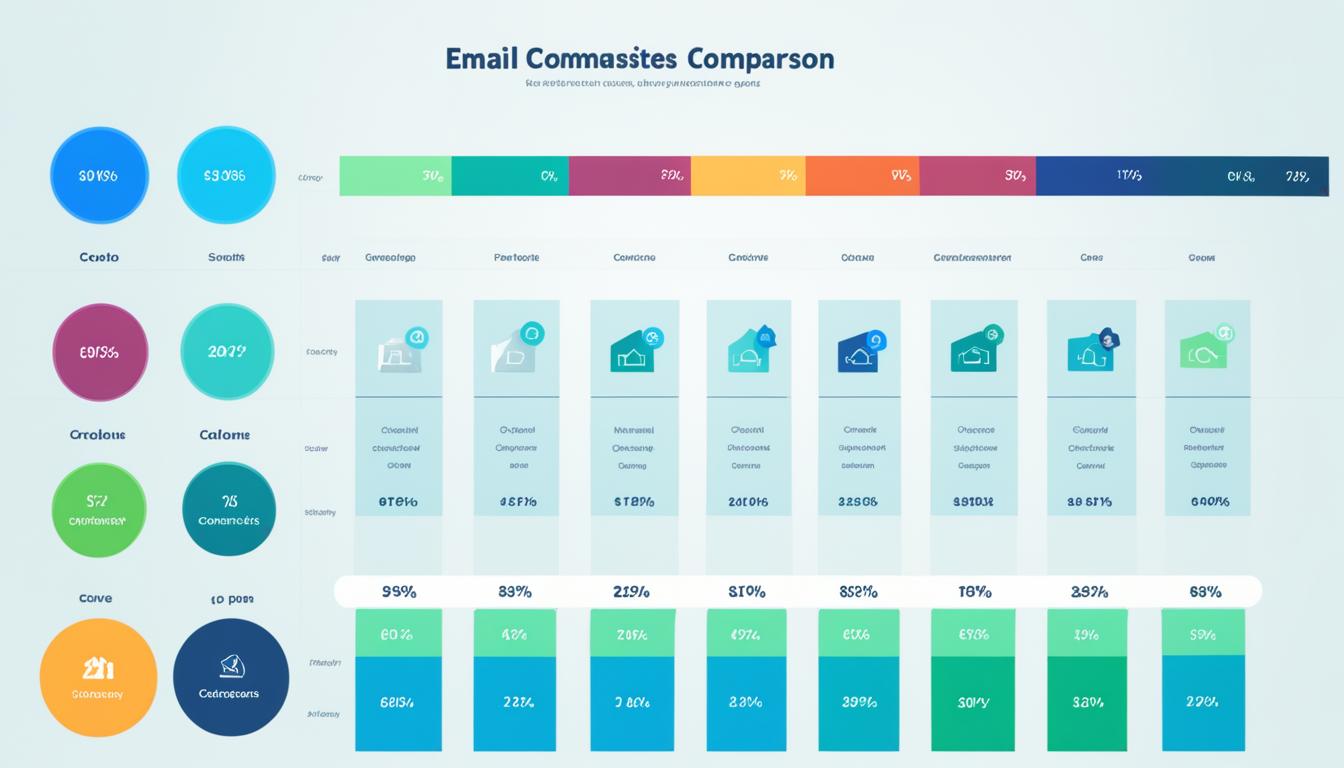
In this section, we will compare the open rates of different industries to gain a comprehensive understanding of how they perform relative to each other. By analyzing industry-specific open rates, you can benchmark your own email campaigns and strive for continuous improvement.
When it comes to email marketing, understanding how your open rates compare to others in your industry can provide valuable insights. It allows you to gauge the performance of your campaigns and identify areas for improvement. By analyzing industry-specific open rates, you can gain a competitive edge and optimize your email marketing strategies.
“Comparing open rates among industries helps identify best practices and potential opportunities for growth. It gives you a clear picture of how your email engagement metrics stack up against your competitors.”
Here is a comparison of open rates by industry:
| Industry | Open Rate |
| Retail | 21% |
| Technology | 18% |
| Finance | 15% |
| Healthcare | 12% |
| Education | 10% |
These open rates provide a snapshot of the industry-specific performance, but it’s important to note that these figures can vary based on factors such as the target audience, email content, and overall email marketing strategy. Therefore, it’s crucial to constantly monitor and evaluate your own email engagement data to make informed decisions and improve open rates.
Stay tuned for the next section where we will explore effective strategies and best practices to improve email open rates across industries.
Improving Email Open Rates: Best Practices and Strategies
Enhancing the performance of your email campaigns requires implementing best practices and effective strategies. By optimizing your email open rates and engagement, you can maximize the impact of your email marketing efforts. Below are some proven techniques to help you improve your email campaign performance and achieve higher open rates.
1. Craft Compelling Subject Lines
The subject line is the first thing that your subscribers see in their inbox. It plays a crucial role in enticing them to open your email. Create attention-grabbing subject lines that pique curiosity, offer value, or invoke urgency. Make sure the subject line accurately reflects the content of your email to build trust with your subscribers.
2. Personalize Your Emails
People respond better to emails that feel personalized and tailored to their preferences. Use segmentation and dynamic content to deliver targeted messages based on subscriber demographics, behavior, or interests. By sending relevant and personalized emails, you can increase engagement and open rates.
3. Optimize Your Sender Name and Email Address
The sender name and email address can significantly impact whether your emails get opened or end up in the spam folder. Use a recognizable and trustworthy sender name that aligns with your brand. Additionally, ensure that your email address has a professional and reputable domain.
4. Test and Optimize Email Content
Experiment with different email content formats, layouts, and visuals to see what resonates best with your audience. Test variations of your emails to understand which elements drive higher open and engagement rates. Continuously analyze and refine your email content based on the insights gained from A/B testing.
5. Optimize for Mobile Devices
With the increasing use of smartphones, it is essential to create mobile-friendly email campaigns. Ensure that your emails are responsive and display correctly on various mobile devices and screen sizes. A seamless mobile experience can improve engagement and increase open rates.
6. Maintain a Clean and Engaged Subscriber List
Avoid sending emails to inactive or disengaged subscribers. Regularly clean your email list by removing bounced addresses, unsubscribes, and inactive subscribers. Implement re-engagement campaigns to encourage inactive subscribers to interact with your emails again. A smaller but engaged subscriber list can lead to higher open rates and better email deliverability.
7. Monitor and Analyze Email Performance Metrics
Track key email marketing metrics such as open rates, click-through rates, and conversion rates to gain insights into the effectiveness of your campaigns. Use these metrics to identify areas of improvement and refine your strategies. Regularly analyze your email campaign performance to achieve continuous growth and improved open rates over time.
By following these best practices and implementing effective strategies, you can enhance your email open rates, increase engagement, and achieve better email marketing performance.
| Best Practices | Benefits |
| Craft compelling subject lines | Increase open rates and attract attention |
| Personalize your emails | Improve relevance and engagement |
| Optimize sender name and email address | Establish trust and credibility |
| Test and optimize email content | Optimize campaign effectiveness through data-driven improvements |
| Optimize for mobile devices | Reach and engage mobile users |
| Maintain a clean and engaged subscriber list | Ensure deliverability and focus on active recipients |
| Monitor and analyze email performance metrics | Identify areas of improvement and refine strategies |
Case Studies: Successful Email Marketing Campaigns
Examining case studies of successful email marketing campaigns can provide valuable insights and inspiration for your own campaigns. By analyzing real-world examples, you can gain a deeper understanding of the strategies and tactics that led to high open rates and engagement. Let’s dive into some noteworthy case studies and explore the email campaign performance data, industry email marketing data, and email performance metrics that contributed to their success.
Case Study 1: E-commerce Fashion Retailer
“Our email campaign focused on personalization and creating a sense of urgency. By using dynamic content and personalized product recommendations based on previous purchases and browsing history, we were able to increase our open rates by 37%.” – Marketing Manager, Fashion Retailer
In this case study, an e-commerce fashion retailer implemented a targeted email campaign with personalized content for each recipient. By leveraging customer data and tailoring the email content to individual preferences, they achieved a significant boost in open rates. The use of dynamic content and personalized product recommendations created a sense of exclusivity and relevance, resulting in higher engagement.
Case Study 2: Tech Startup
“By incorporating storytelling elements into our email campaigns, we saw a 45% increase in open rates. Our emails shared success stories from our customers, highlighting the value and impact of our product. This approach resonated with our audience and drove higher engagement.” – Marketing Director, Tech Startup
For this tech startup, storytelling played a key role in capturing their audience’s attention. By sharing success stories from satisfied customers, they were able to create a sense of trust and showcase the real-world benefits of their product. The use of emotive language and relatable narratives contributed to a significant increase in open rates and ultimately improved campaign performance.
| Case Study | Email Campaign Objective | Open Rate Increase |
| Case Study 1: E-commerce Fashion Retailer | Personalization and creating a sense of urgency | 37% |
| Case Study 2: Tech Startup | Incorporating storytelling elements | 45% |
These case studies demonstrate the power of strategic email marketing techniques. By understanding and implementing successful strategies like personalization, dynamic content, storytelling, and more, you can optimize your own email campaigns and improve your open rates.
Stay tuned for the final section where we summarize the key insights uncovered in this exploration of email marketing open rates by industry benchmarks and insights.
Conclusion
In conclusion, understanding email marketing open rates by industry benchmarks and insights is crucial for optimizing your email campaigns. By analyzing industry-specific trends, benchmarks, and implementing best practices, you can enhance the effectiveness of your campaigns and achieve higher open rates.
Industry-specific data and analysis provide valuable insights into how different sectors perform in terms of email engagement and open rates. By benchmarking your own campaigns against these industry benchmarks, you can identify areas for improvement and refine your strategies to achieve better results.
Furthermore, staying updated on the latest trends in email marketing open rates is essential for staying competitive. By keeping a close eye on the changing landscape, you can adapt your campaigns to align with the evolving preferences and behaviors of your target audience, resulting in higher engagement and open rates.
Lastly, by examining real-world examples of successful email marketing campaigns, you can gain inspiration and learn from the strategies and tactics that led to high open rates and engagement. Case studies provide valuable insights into what works and what doesn’t, offering practical takeaways that you can apply to your own campaigns.
FAQ
What are email open rates?
Email open rates refer to the percentage of recipients who opened an email. It is a metric used to measure the success and effectiveness of email campaigns.
How are email open rates calculated?
Email open rates are calculated by dividing the number of unique email opens by the total number of delivered emails, and then multiplying the result by 100 to get the percentage.
Do open rates vary by industry?
Yes, open rates can vary significantly across different industries. Factors such as the nature of the industry, target audience, and email content can influence open rates.
What is considered a good open rate?
The average open rate varies by industry, but a good open rate is generally considered to be above 20%. However, it’s important to compare your open rates against industry benchmarks to get a more accurate assessment.
How can I improve my email open rates?
To improve your email open rates, you can focus on optimizing your subject lines, personalizing your emails, segmenting your audience, and sending emails at the right time to increase engagement.
Are there any industry-specific best practices for email open rates?
Yes, different industries may have specific strategies that work well for them. For example, retail companies might benefit from offering exclusive discounts in their subject lines, while non-profit organizations might emphasize the impact of donations.
How can I track my email open rates?
Email marketing platforms and tools provide built-in tracking and reporting features that allow you to monitor and analyze your email open rates. These platforms provide valuable insights into the performance of your campaigns.
Are there any external factors that can impact email open rates?
Yes, external factors such as the time and day of the week when emails are sent, the reputation of your email domain, and the presence of competing emails in the recipient’s inbox can all influence open rates.