


Keyword research is crucial to driving targeted traffic and increasing online sales for your e-commerce website. By identifying high-converting keywords and optimizing your product pages, you can attract more potential customers and improve your overall online business. Let’s explore some effective keyword research techniques specifically tailored for e-commerce businesses.
1. Understand Your Target Audience
To effectively leverage keyword research, it’s essential to have a deep understanding of your target audience. Identify their needs, preferences, and pain points to uncover the keywords they are likely to use when searching for products similar to yours.
2. Use Keyword Research Tools
Utilize keyword research tools like Google Keyword Planner, SEMrush, or Ahrefs to discover relevant keywords with high search volume and low competition. These tools provide valuable insights into search trends, related keywords, and their performance metrics, helping you make informed decisions when optimizing your product pages.
3. Long-Tail Keywords
Incorporate long-tail keywords into your keyword research strategy. Long-tail keywords are longer, more specific phrases that attract highly targeted traffic. While they may have lower search volume, they often have higher conversion rates and lower competition, making them an excellent opportunity to drive relevant traffic to your e-commerce site.
4. Optimize Product Pages
Once you have identified the keywords relevant to your target audience, optimize your product pages accordingly. Include these keywords in your page titles, meta descriptions, headers, and throughout your content. However, remember to do so naturally and avoid keyword stuffing, as it may negatively impact your search engine rankings.
5. Analyze and Refine
Regularly analyze the performance of your chosen keywords and make adjustments as needed. Monitor your website’s organic traffic, conversion rates, and sales to determine which keywords are driving the most desirable results. Refine your keyword strategy based on this data to continuously improve your e-commerce website’s performance.
By leveraging keyword research effectively, you can drive targeted traffic to your e-commerce site and significantly increase online sales. Implement these techniques to optimize your product pages for relevant keywords and attract your ideal customers.
| Benefits of Effective Keyword Research for E-commerce | Actions to Take |
| Increase online sales | Identify high-converting keywords and optimize product pages |
| Drive targeted traffic | Utilize keyword research tools and incorporate long-tail keywords |
| Improve search engine rankings | Optimize product pages with relevant keywords naturally |
| Enhance overall online business performance | Analyze and refine keyword strategy based on performance metrics |
Crafting Compelling Product Descriptions with SEO in Mind
Well-written product descriptions can do more than just entice customers. They also play a crucial role in improving your website’s search engine rankings. In this section, we will guide you on how to create compelling product descriptions that are optimized for search engines, helping you improve your website’s visibility and increase organic traffic.
To craft product descriptions that capture the attention of both customers and search engines, keep the following e-commerce SEO techniques in mind:
- Use targeted keywords: Incorporate relevant keywords naturally into your product descriptions. This helps search engines understand the context of your products and improve your rankings for specific search queries.
- Showcase unique selling points: Highlight the features, benefits, and unique qualities of your products in an engaging manner. This not only helps customers make informed purchasing decisions but also improves your search engine rankings by providing valuable content.
- Create original and compelling content: Avoid using generic product descriptions provided by manufacturers. Instead, write unique descriptions that reflect your brand’s voice and personality. This not only helps you stand out from competitors but also improves your organic search visibility.
Tip: Consider conducting competitor analysis to gain insights into their product descriptions. This can help you identify gaps and craft descriptions that are even more compelling and differentiated. Remember, never copy content verbatim from your competitors as this can negatively impact your SEO efforts.
- Focus on readability: Write product descriptions in a clear and concise manner that is easy for both customers and search engines to scan. Use proper formatting, such as subheadings and bullet points, to enhance readability.
- Include customer reviews and testimonials: Incorporating snippets of positive customer reviews directly into the product descriptions can instill trust and boost conversions. Search engines also consider user-generated content as valuable, improving your search engine rankings.
- Optimize meta tags: Pay attention to the meta title and meta description tags for each product page. Ensure they include relevant keywords and compelling information to entice both search engine users and potential customers.
By following these e-commerce SEO techniques, you can create product descriptions that not only appeal to customers but also improve your website’s search engine rankings. Remember to regularly evaluate and update your descriptions to keep them fresh, relevant, and aligned with your evolving business goals.
Having an attractive and visually engaging product image can also enhance the appeal of your product descriptions. A high-quality image showcases the product’s features and can be the deciding factor for a potential customer.
| Benefits of Optimized Product Descriptions for SEO: | Impact on Search Engine Rankings |
| Improved keyword relevancy | Higher ranking for targeted search queries |
| Higher organic click-through rates | Increased organic traffic to product pages |
| Enhanced user experience | Reduced bounce rates, leading to improved search engine rankings |
| Increased conversions | Improved visibility and higher likelihood of attracting potential customers |
Optimizing Your E-commerce Site’s Structure and Navigation
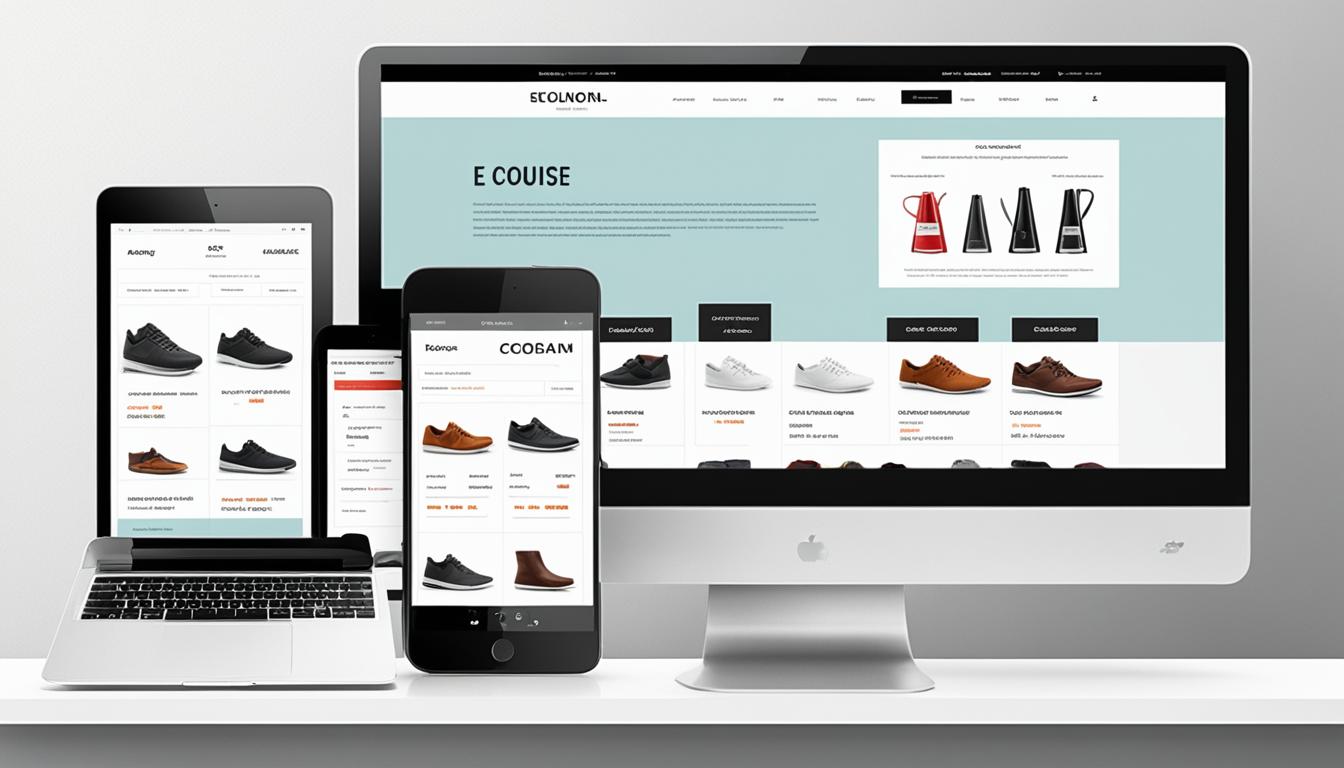
A well-structured and easily navigable website is crucial for both user experience and SEO. When visitors can easily find the information they’re looking for, they are more likely to stay on your site, explore your products, and make a purchase. Additionally, search engines favor websites with a clear structure and intuitive navigation, as it helps them understand the content and index it effectively.
Here are some strategies and best practices to optimize your e-commerce site’s structure and navigation:
1. Categorize and Organize Your Products
Categorizing your products helps create a logical hierarchy and enables visitors to browse through similar items effortlessly. Consider your target audience and their buying preferences when organizing your products into categories and subcategories. Avoid creating too many levels of categories, as it can confuse users and dilute the SEO value of your pages.
2. Implement a Clear Menu and Navigation System
Your website’s menu and navigation should be clear, intuitive, and easy to use. Use descriptive labels for your menu items and avoid jargon or ambiguous terminology. Your menu should be easily accessible from any page on your site, preferably at the top or left-hand side of the webpage.
Consider implementing a breadcrumb navigation system that shows visitors the path they’ve taken to arrive at a specific page. Breadcrumbs help users navigate between different pages and enhance their understanding of your site’s structure.
3. Create User-Friendly URLs
Optimize your URLs to reflect the content of the page and make them user-friendly. Use relevant keywords in your URLs, separate words with hyphens, and keep them concise and descriptive. Avoid using long strings of numbers or special characters in your URLs, as they can confuse both users and search engines.
4. Improve Page Load Speed
Website speed is an essential factor for both user experience and SEO. Slow-loading pages can lead to higher bounce rates and negatively impact your search engine rankings. Optimize your images, minify CSS and JavaScript files, leverage browser caching, and consider using a content delivery network (CDN) to improve your site’s loading speed.
5. Implement Internal Linking
Internal linking is the practice of linking to other relevant pages within your website. It helps search engines understand the relationships between different pages and improves the overall crawlability of your site. When creating internal links, use descriptive anchor text that includes relevant keywords.
When optimizing your e-commerce site’s structure and navigation, always prioritize the user experience. A logical and intuitive website structure not only improves your search engine rankings but also enhances user satisfaction and encourages conversions.
| Benefits of Optimizing Your E-commerce Site’s Structure and Navigation |
| Improved user experience |
| Increased time spent on site |
| Higher search engine rankings |
| Enhanced crawlability and indexing |
| Reduced bounce rate |
| Higher conversion rates |
Harnessing the Power of User-Generated Content for SEO
User-generated content, such as reviews and testimonials, is a goldmine for your e-commerce website. Not only does it help build trust and credibility, but it also plays a significant role in boosting your website’s SEO. By harnessing the power of user-generated content, you can enhance your online visibility, improve search engine rankings, and ultimately, drive more sales.
Encouraging your customers to leave reviews and provide testimonials is a powerful e-commerce SEO technique. Positive reviews not only influence potential customers’ purchasing decisions but also signal to search engines that your website offers valuable and relevant information. This, in turn, can help improve your website’s organic visibility and attract more targeted traffic.
Here are some techniques to leverage user-generated content and boost sales online:
1. Encourage Review Submissions
Make it easy for your customers to leave reviews by providing a seamless reviewing process. Request feedback through automated email follow-ups, incentivize customers with exclusive discounts or rewards, and prominently display review options on your website. The more reviews you accumulate, the more prominent your website becomes in search engine results.
2. Showcase Testimonials
Displaying customer testimonials on your website not only instills confidence in potential buyers but also provides valuable content for search engines. Include testimonials on product pages, landing pages, or even in a dedicated section of your website. Incorporate relevant keywords in the testimonials to optimize them for search engines.
3. Implement a Ratings and Reviews System
A ratings and reviews system allows customers to rate your products and leave detailed reviews. This user-generated content adds credibility to your offerings and can significantly impact your search engine rankings. Display star ratings and review snippets in search engine results, making your website stand out among competitors.
4. Leverage Social Media Engagement
Encourage customers to share their experiences on social media platforms. Create branded hashtags and engage with user-generated content related to your brand. Not only does this boost brand visibility and customer engagement, but it also provides valuable backlinks and signals to search engines.
By utilizing these e-commerce SEO techniques and effectively leveraging user-generated content, you can enhance your website’s visibility, boost sales online, and establish your brand as a trusted authority in your industry.
Now, let’s take a look at a comprehensive table highlighting the various types of user-generated content and their impact on SEO:
| Types of User-Generated Content | Impact on SEO |
| Product Reviews | Improves search engine rankings, enhances organic visibility, and influences purchase decisions. |
| Testimonials | Boosts trust and credibility, provides valuable content for search engines, and improves website visibility. |
| Star Ratings | Increases click-through rates in search engine results, enhances brand visibility, and improves organic rankings. |
| Social Media Engagement | Generates backlinks and social signals, improves brand visibility, and increases organic traffic. |
By incorporating these user-generated content strategies into your SEO efforts, you can create a strong online presence, drive more traffic to your e-commerce website, and ultimately boost sales online.
Establishing Authority with High-Quality Backlinks
When it comes to e-commerce website optimization, building high-quality backlinks is an essential strategy to drive traffic to your online store. Backlinks from authoritative websites not only improve your website’s visibility but also establish your e-commerce site as an authority in your industry.
To acquire high-quality backlinks, you need to focus on creating valuable and shareable content that naturally attracts links from other reputable websites. This can include engaging blog posts, informative product guides, or in-depth industry reports.
Additionally, reaching out to influencers, industry experts, and bloggers in your niche can help you generate organic backlinks. Collaborating with them on guest posts or obtaining product reviews can expose your e-commerce website to a wider audience and earn valuable backlinks.
Benefits of High-Quality Backlinks:
- Improved search engine rankings: Backlinks from authoritative websites signal to search engines that your e-commerce site is reputable and trustworthy, resulting in higher organic rankings.
- Increased referral traffic: High-quality backlinks can drive targeted traffic from other websites directly to your e-commerce site, increasing the chances of conversions and sales.
- Enhanced brand visibility: When your website is linked to from respected sources, it elevates your brand’s visibility and credibility among potential customers.
Pro Tip: Focus on building backlinks from websites with relevance to your industry. Quality over quantity is key for effective e-commerce website optimization.
By consistently implementing effective strategies for acquiring high-quality backlinks, you can establish your e-commerce website as an authority in your industry, drive traffic, and ultimately boost sales online.
| Website | Affiliate | Domain Authority |
| www.example1.com | No | 70 |
| www.example2.com | Yes | 85 |
| www.example3.com | No | 65 |
Maximizing Your E-commerce Website’s Mobile-Friendliness
In today’s digital landscape, mobile usage is on the rise, making it crucial for your e-commerce website to be fully optimized for mobile devices. A mobile-friendly site not only improves user experience but also plays a key role in improving search engine rankings and driving traffic to your e-commerce store. In this section, we will explore effective e-commerce SEO techniques to ensure your website is mobile-friendly, thus maximizing its potential to improve search engine rankings and drive traffic to your online store.
Responsive Web Design
One of the most important factors in optimizing your e-commerce website for mobile devices is implementing responsive web design. Responsive design ensures that your site automatically adjusts its layout and content according to the user’s screen size, providing a seamless browsing experience across all devices. By using CSS media queries and flexible grids, your website will adapt to smartphones, tablets, and desktop screens, enhancing user satisfaction and improving search engine visibility.
Mobile Page Speed Optimization
Mobile users expect speedy loading times, and search engines favor websites that prioritize mobile page speed. To optimize your e-commerce site’s mobile speed, consider compressing images, minimizing code, and utilizing caching techniques. By reducing page load times, you can provide a smoother browsing experience for mobile users and increase the likelihood of visitors staying on your site and making purchases.
Mobile-Friendly Navigation
Effective navigation is essential for a user-friendly mobile experience. Simplify your navigation menu for mobile users by utilizing dropdown menus, collapsible sections, and visible search bars. Ensure that buttons and links are easily tappable, providing a seamless journey through your website. Intuitive navigation not only enhances user experience but also supports search engine crawlers in understanding your site’s structure, ultimately boosting your search engine rankings.
Optimized Mobile Checkout Process
Streamlining the mobile checkout process is crucial for driving conversions on your e-commerce site. Optimize your mobile checkout by minimizing form fields, implementing autofill features, and offering mobile payment options such as Apple Pay or Google Pay. By simplifying the checkout process, you can reduce cart abandonment rates and improve user satisfaction, ultimately boosting your online sales.
| E-commerce SEO Techniques | Benefits |
| Implement responsive web design | – Enhanced user experience for mobile users – Improved search engine rankings – Increased mobile traffic |
| Optimize mobile page speed | – Faster loading times – Improved user engagement – Higher search engine visibility |
| Ensure mobile-friendly navigation | – Enhanced user experience – Clear site structure for search engines – Improved search engine rankings |
| Simplify mobile checkout process | – Increased conversions – Reduced cart abandonment rates – Enhanced user satisfaction |
By implementing these e-commerce SEO techniques, you can significantly improve your website’s mobile-friendliness, rank higher in search engine results, and drive targeted traffic to your e-commerce store. Stay ahead in the competitive online landscape by prioritizing mobile optimization and providing a seamless experience for your mobile users.
Conclusion
In this article, we have explored several essential SEO strategies that will significantly enhance your e-commerce website and boost your online sales. By implementing these tactics, you can improve your search engine rankings, drive targeted traffic to your site, and ultimately increase your revenue.
Remember, SEO is an ongoing process, and it’s crucial to consistently monitor and adapt your efforts to stay ahead in the competitive e-commerce landscape. Keep track of your website’s performance, analyze data, and make necessary adjustments to optimize your online presence.
By leveraging the power of keyword research, crafting compelling product descriptions, optimizing your site’s structure and navigation, harnessing user-generated content, and establishing authority with high-quality backlinks, you can create a strong foundation for success in the online marketplace.
Additionally, it’s essential to prioritize mobile-friendliness, as more and more users are accessing the internet via their mobile devices. By ensuring your e-commerce website is optimized for mobile, you can improve search engine rankings, drive traffic, and provide a seamless user experience for your mobile customers.
FAQ
What are SEO strategies for e-commerce websites?
SEO strategies for e-commerce websites involve techniques and tactics to improve the visibility and search engine rankings of your online store. These strategies include keyword research, on-page optimization, backlink building, and mobile optimization.
How can SEO techniques help boost sales online?
SEO techniques can help boost sales online by driving targeted traffic to your e-commerce website. By optimizing your website for search engines, you can increase your visibility in search results, attract more potential customers, and ultimately improve your chances of making sales.
What are some e-commerce SEO techniques to optimize my website?
Some e-commerce SEO techniques to optimize your website include conducting keyword research to find high-converting keywords, optimizing product pages with relevant keywords, improving your website’s structure and navigation, and encouraging user-generated content such as reviews and testimonials.
How does keyword research help increase online sales?
Keyword research helps increase online sales by identifying the words and phrases that potential customers are using to search for products or services in your industry. By optimizing your product pages for these keywords, you can improve your website’s visibility in search results and attract more qualified traffic.
How can I improve search engine rankings with e-commerce SEO techniques?
To improve search engine rankings with e-commerce SEO techniques, you can focus on optimizing your website’s structure and navigation, creating compelling product descriptions with relevant keywords, acquiring high-quality backlinks from authoritative websites, and ensuring your site is mobile-friendly.
What is the benefit of optimizing my e-commerce site’s structure and navigation?
Optimizing your e-commerce site’s structure and navigation can improve both user experience and search engine rankings. A well-structured website makes it easier for visitors to find products and navigate through your site, while search engines can crawl and index your pages more efficiently, improving your site’s visibility in search results.
How does user-generated content help boost sales online?
User-generated content, such as reviews and testimonials, helps build trust and credibility with potential customers. Positive reviews and testimonials can persuade visitors to make a purchase, increasing your sales. Moreover, search engines often consider user-generated content as a ranking factor, so encouraging customers to leave reviews can also improve your website’s SEO.
What is the importance of acquiring high-quality backlinks?
Acquiring high-quality backlinks from authoritative websites is important for establishing your e-commerce site as an industry authority. Backlinks not only bring traffic directly from the referring website but also signal to search engines that your site is trustworthy and valuable, improving your website’s visibility in search results.
How does mobile-friendliness impact e-commerce SEO?
With the increasing use of mobile devices for online shopping, having a mobile-friendly e-commerce website is essential. Mobile-friendliness is a ranking factor for search engines, and a mobile-friendly site provides a better user experience, increasing the likelihood of visitors staying on your site, making purchases, and ultimately boosting your online sales.