


If you’re new to PPC advertising, this section will guide you through the basics. Learn how to set up your first PPC campaign, choose the right keywords, and craft compelling ad copy that drives results. Discover the essential tools and resources that will help you kickstart your PPC journey and achieve your marketing goals.
Setting Up Your First PPC Campaign
Setting up your first PPC campaign can seem overwhelming, but with the right guidance, you’ll be up and running in no time. Follow these steps to get started:
- Choose a PPC platform: There are several PPC platforms to choose from, including Google Ads, Bing Ads, and social media advertising platforms. Research each platform’s features and audience reach to determine the best fit for your business.
- Create your account: Sign up for an account on your chosen PPC platform. Provide the necessary information and follow the platform’s instructions to set up your account.
- Determine your campaign objectives: Clearly define your goals for the PPC campaign. Are you looking to drive website traffic, generate leads, or increase sales? Understanding your objectives will help you optimize your campaign for success.
- Choose your targeting options: Select the geographic locations, languages, and demographics you want to target. Narrowing down your audience will ensure your ads reach the right people.
- Set your budget: Determine how much you are willing to spend on your PPC campaign. Set a daily or monthly budget that aligns with your marketing goals.
- Create your ad groups: Organize your campaign by creating ad groups based on similar keywords and themes. This will help you manage and optimize your ads more efficiently.
Choosing the Right Keywords
Keywords are the foundation of a successful PPC campaign. They determine when and where your ads will appear. Follow these tips to choose the right keywords:
- Research relevant keywords: Use keyword research tools such as Google Keyword Planner or SEMrush to identify keywords that are relevant to your business and have a high search volume.
- Consider intent: Choose keywords that align with the intent of your target audience. Are they looking for information, products, or services?
- Focus on long-tail keywords: Long-tail keywords are more specific and less competitive than broad keywords. They tend to attract more qualified traffic and have a higher chance of conversion.
- Monitor and refine your keyword list: Regularly review and update your keyword list based on performance data. Remove underperforming keywords and add new ones that have the potential to drive better results.
Crafting Compelling Ad Copy
Once you have your campaign set up and your keywords selected, it’s time to create compelling ad copy that entices users to click. Follow these best practices:
- Write clear and concise headlines: Grab attention with compelling headlines that clearly communicate the value proposition of your product or service.
- Highlight benefits: Focus on the benefits users will gain by clicking on your ad. How will your product or service solve their problems or fulfill their needs?
- Include a compelling call to action: Encourage users to take action by including a strong call to action in your ad copy. Use phrases like “Shop Now,” “Sign Up Today,” or “Get a Free Quote.”
- Use relevant ad extensions: Take advantage of ad extensions like sitelinks, callouts, or structured snippets to provide additional information and make your ad more appealing.
By following these steps and best practices, you’ll be well on your way to creating successful PPC campaigns that drive results.
| Tool/Resource | Description |
| Google Ads | The leading PPC platform with extensive reach and targeting options. |
| Bing Ads | A PPC platform that allows you to reach a different audience than Google Ads. |
| Keyword Research Tools | Tools like Google Keyword Planner and SEMrush help you research and discover relevant keywords for your PPC campaigns. |
| Ad Copy Templates | Pre-designed ad copy templates can serve as a starting point for crafting compelling ads. |
| PPC Blogs and Forums | Stay updated on the latest PPC trends and strategies by following industry-leading blogs and participating in forums. |
PPC Campaign Optimization
Once your PPC campaigns are up and running, it’s crucial to optimize them for maximum efficiency. By implementing advanced strategies and following industry best practices, you can improve your click-through rates (CTR), reduce costs, and increase conversions. Let’s explore some key insights and tips for successful PPC advertising.
Improving Click-Through Rates (CTR)
High CTR is indicative of the effectiveness of your PPC ads in capturing user attention. To boost your CTR, consider the following tactics:
- Utilize compelling ad copy that highlights unique selling points and offers a clear call-to-action.
- Experiment with different ad formats, such as responsive search ads or expanded text ads, to determine which resonates best with your target audience.
- Focus on relevant keywords and ensure your ads match the user’s search intent.
Reducing Costs
Reducing costs while maintaining good performance is a key goal for any PPC campaign. Here are some effective strategies to help you achieve that:
- Regularly analyze your campaign data to identify high-cost keywords and adjust bids accordingly. Consider utilizing bid strategies like target CPA or maximize clicks to help automate this process.
- Implement negative keywords to prevent your ads from showing up for irrelevant searches, which can drive up costs without generating valuable conversions.
- Use ad scheduling to control when your ads appear, focusing on peak times when your target audience is most active.
Increasing Conversions
Increasing conversions is the ultimate goal of your PPC campaigns. Here are some strategies to optimize your campaigns for better conversion rates:
- Ensure your landing pages are designed for maximum user engagement and have clear, compelling calls-to-action.
- Experiment with different ad extensions, such as sitelinks or call extensions, to provide additional information and increase the chances of conversion.
- Perform A/B testing to evaluate the impact of different ad variations and landing page designs on conversion rates.
Google Ads Tutorials and Paid Search Marketing Best Practices
To further enhance your PPC campaign optimization efforts, take advantage of Google Ads tutorials and paid search marketing best practices. Google provides a wealth of resources, including online courses, webinars, and community forums, that can help you stay up-to-date with the latest trends and strategies in PPC advertising.
The Secrets to Successful PPC Advertising
Successful PPC advertising requires a combination of insightful data analysis, strategic planning, and ongoing optimization. By constantly monitoring the performance of your campaigns and making data-driven adjustments, you can uncover the secrets to achieving your advertising goals.
“PPC advertising is a dynamic landscape, requiring marketers to stay nimble and adapt their strategies based on real-time data and industry trends.” – John Smith, PPC Expert
With the right mix of creativity, analysis, and execution, you can unlock the full potential of PPC advertising and drive impressive results for your business.
Table: PPC Campaign Optimization Checklist
| Optimization Action | Impact |
| Improve ad copy with clear call-to-action | Increased CTR |
| Experiment with different ad formats | Improved ad performance |
| Refine keyword targeting | Higher relevance and CTR |
| Analyze and adjust bids for high-cost keywords | Reduced costs |
| Implement negative keywords | Reduced expenses on irrelevant clicks |
| Utilize ad scheduling | Cost-effective ad placement |
| Optimize landing pages for conversions | Increased conversion rates |
| Experiment with ad extensions | Enhanced opportunities for conversions |
| Perform A/B testing | Insights for improving performance |
| Stay updated with Google Ads tutorials and best practices | Improved campaign management |
Maximizing PPC Results with AdWords Best Practices
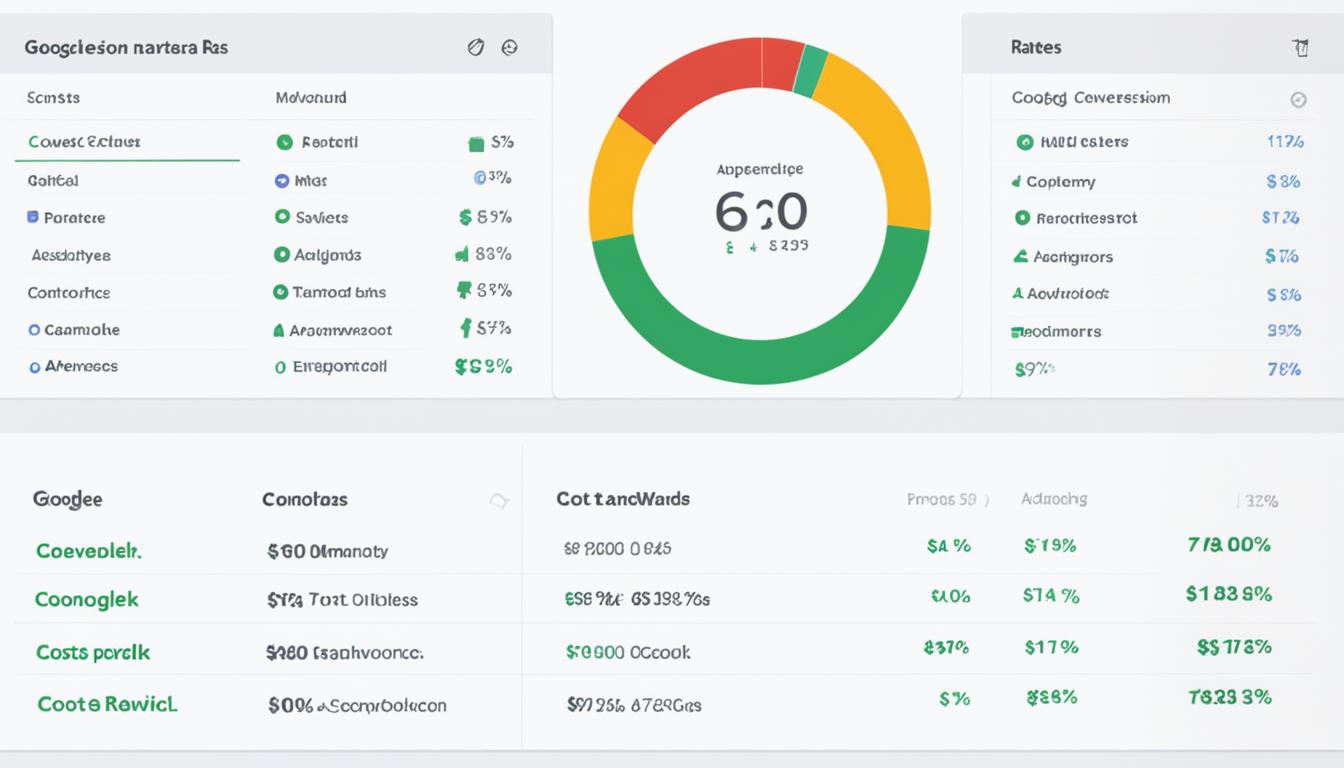
Google AdWords is a powerful platform for PPC advertising. With the right strategies and tactics, you can achieve exceptional results and drive more qualified traffic to your website. By implementing these AdWords best practices, you’ll optimize your campaigns and maximize your PPC performance.
Leverage Targeting Options
One of the key advantages of Google AdWords is its precise targeting capabilities. Take advantage of these options to reach the right audience for your business:
- Geo-targeting: Narrow down your audience based on location, ensuring your ads are shown to users in specific regions or locations.
- Device targeting: Tailor your campaigns to display on specific devices like mobile phones or desktops, optimizing your ads for different platforms.
- Remarketing: Re-engage users who have previously visited your website by showing them targeted ads across the Google Display Network.
Utilize Ad Extensions
Ad extensions provide additional information to your ads, making them more prominent and engaging. They improve your ad’s visibility and increase the chances of user interaction. Consider using these popular ad extensions:
- Sitelink extensions: Include additional links in your ad, directing users to specific pages on your website.
- Call extensions: Display your business phone number alongside your ad, encouraging users to call directly.
- Location extensions: Showcase your business address and enable users to find your physical location easily.
Optimize Landing Pages
The landing page is where users land after clicking on your ad. It’s crucial to optimize these pages to ensure a seamless user experience and increase conversions:
- Create relevant and compelling content that matches the user’s search intent.
- Design clear and concise call-to-action buttons that drive users to take the desired action.
- Optimize page load speed to minimize bounce rates and improve overall performance.
Remember, a well-optimized landing page is just as important as the ad itself. Make sure the messaging and value proposition from your ad align with the content on the landing page.
By following these AdWords best practices, you can enhance your PPC campaigns and achieve outstanding results. Stay tuned for the next section, where we’ll delve into boosting ROI in paid search advertising.
Boosting ROI in Paid Search Advertising
When it comes to paid search advertising, your ultimate goal is to maximize your return on investment (ROI). To achieve this, you need to optimize your PPC campaigns using advanced techniques that deliver results. In this section, we’ll uncover insider tips, secret strategies, and proven methods to help you get the most out of your advertising budget and achieve higher profitability.
1. PPC Optimization:
To boost your ROI, you need to optimize your PPC campaigns to drive more targeted traffic and increase conversions. Implement the following optimization strategies:
- Keyword Research: Conduct thorough keyword research to identify the most relevant and high-impact keywords for your campaign. Make use of keyword research tools like Google Keyword Planner or SEMrush.
- Ad Copy Testing: Continuously test and refine your ad copy to improve click-through rates (CTR) and increase conversions. Experiment with different headlines, descriptions, and calls-to-action to find what resonates best with your audience.
- Landing Page Optimization: Ensure your landing pages align with your ad messaging and are optimized for conversions. Focus on clear and compelling headlines, persuasive content, and strong calls-to-action.
- Ad Scheduling: Analyze your campaign data to identify peak performance periods and schedule your ads to appear during those times. This will help maximize your exposure and increase the likelihood of conversions.
2. PPC Advertising Guide for Beginners:
If you’re new to PPC advertising, don’t worry—we’ve got you covered. Follow this step-by-step guide to get started:
- Set Clear Goals: Determine your campaign objectives and what you want to achieve with your PPC advertising.
- Create a Budget: Define your advertising budget and allocate funds to different campaigns and keywords based on their potential ROI.
- Select the Right Platform: Choose the PPC advertising platform that best aligns with your target audience and industry. Google Ads and Bing Ads are popular options.
- Choose Relevant Keywords: Conduct keyword research to identify the keywords your target audience is using to search for products or services like yours.
- Create Compelling Ads: Craft engaging and persuasive ad copy that grabs attention and entices users to click.
- Monitor and Optimize: Continuously monitor your campaign performance and make data-driven optimizations to improve your results over time.
3. Insider’s Tips for PPC:
Want to take your PPC campaigns to the next level? Here are some insider tips:
“Focus on Quality Score: A high Quality Score can lead to lower costs and higher ad rankings. Make sure your keywords, ad copy, and landing pages are all aligned and optimized for relevancy.”
“Leverage Ad Extensions: Enhance your ads with extensions like sitelinks, callouts, and structured snippets to provide more information and improve click-through rates.”
“Target the Right Audience: Use audience targeting features to reach your ideal customers at the right time and place. This can help increase your campaign’s effectiveness.”
| PPC Optimization Techniques | Benefits |
| Keyword Research | Identify high-impact keywords that drive targeted traffic |
| Ad Copy Testing | Improve CTR and increase conversions through compelling ad messaging |
| Landing Page Optimization | Create high-converting landing pages that match your ad campaigns |
| Ad Scheduling | Maximize exposure during peak performance periods |
By implementing these insider tips and optimizing your PPC campaigns, you’ll be well on your way to boosting your ROI and achieving greater profitability.
Expanding Your PPC Reach

Take your PPC campaigns to the next level by expanding your reach. While Google Ads is a powerful platform, there are other online advertising platforms that can help you target a broader audience. By leveraging the world of paid media marketing, you can tap into additional channels and maximize the exposure of your ads.
Exploring Online Advertising Platforms
Online advertising platforms provide opportunities to reach your target audience beyond traditional search engines. Platforms like Facebook Ads, Instagram Ads, and LinkedIn Ads offer unique targeting options and access to a vast user base. By carefully selecting the right platforms for your business, you can expand your reach and engage with potential customers on different channels.
Search Engine Marketing (SEM) Tips
Search Engine Marketing (SEM) includes both paid search advertising and search engine optimization (SEO). By incorporating SEM into your PPC strategy, you can broaden your reach and increase website visibility on search engine result pages. Here are some SEM tips to consider:
- Perform comprehensive keyword research to identify relevant keywords and optimize your PPC campaigns accordingly
- Create compelling ad copy that resonates with your target audience and encourages clicks
- Optimize your landing pages to enhance user experience and increase conversion rates
- Regularly monitor and analyze your SEM performance to identify areas for improvement
Digital Advertising Strategies
Digital advertising goes beyond traditional PPC campaigns. It encompasses various strategies like display advertising, video advertising, native advertising, and more. By incorporating these strategies into your PPC efforts, you can diversify your ad formats and deliver engaging content to your audience. Here are some digital advertising strategies to explore:
- Display Advertising: Display ads can be placed on websites, apps, and other digital platforms to increase brand visibility
- Video Advertising: Video ads can be served as pre-roll, mid-roll, or post-roll formats on popular video sharing platforms like YouTube
- Native Advertising: Native ads blend seamlessly with the content of a website or app, providing a non-disruptive ad experience
- Remarketing: Remarketing allows you to target users who have previously interacted with your website or ads, increasing brand recall and conversion rates
By incorporating these digital advertising strategies alongside your PPC campaigns, you can reach a wider audience and amplify the impact of your marketing efforts.
| Platform | Main Features |
| Facebook Ads | Advanced targeting options, vast user base, various ad formats |
| Instagram Ads | Engaging visual platform, access to younger demographics |
| LinkedIn Ads | Professional networking platform, B2B targeting options |
Mastering PPC Analytics and Reporting
Effective PPC advertising requires continuous analysis and monitoring. Understanding the performance of your campaigns is crucial for optimizing your strategies and achieving better results. In this section, we will dive into the realm of PPC analytics and reporting, providing you with the knowledge and tools to master this essential aspect of pay per click advertising.
Tracking Key Metrics and Interpreting Data
Tracking key metrics is essential for evaluating the success of your PPC campaigns. By monitoring metrics such as click-through rates, conversion rates, and cost-per-click, you can gain valuable insights into the effectiveness of your ads and make data-driven decisions. Analyzing and interpreting this data will help you identify areas for improvement and refine your strategies for better performance.
To track the performance of your PPC campaigns, you can utilize tools like Google Ads, which offers comprehensive reporting features. These reports provide detailed information on impressions, clicks, conversions, and other relevant metrics. By regularly reviewing these reports, you can monitor the progress of your campaigns and identify any patterns or trends that may impact your advertising efforts.
The Importance of Effective Google Ads Management
Google Ads management plays a critical role in the success of your PPC marketing strategies. Effective management ensures that your campaigns are optimized for maximum performance and return on investment. By actively monitoring and adjusting your ads, keywords, and bidding strategies, you can maximize your ad visibility and reach your target audience more effectively.
“Effective PPC advertising requires continuous analysis and monitoring.”
Google Ads provides a variety of tools and features to help you manage your PPC campaigns. From ad scheduling and ad rotation options to keyword performance analysis and bidding strategies, Google Ads offers a comprehensive suite of tools to optimize your campaigns. By understanding and utilizing these features effectively, you can improve the performance of your ads and generate better results.
Producing Informative Reports
The ability to generate informative reports is crucial for communicating the effectiveness of your PPC campaigns to stakeholders and making data-driven decisions. When creating reports, it’s important to include key performance metrics, actionable insights, and clear visualizations that effectively convey the impact of your advertising efforts.
Utilizing tools like Google Data Studio can simplify the process of creating visually engaging and informative reports. Google Data Studio allows you to integrate data from multiple sources, create customized dashboards, and share reports with stakeholders. By presenting your data in a clear and visually appealing format, you can effectively communicate the success of your PPC campaigns and gain support for future initiatives.
Conclusion
Congratulations on completing our comprehensive insider’s guide to Pay Per Click (PPC) advertising. Throughout this guide, you have gained valuable insights into the world of online advertising and learned effective strategies and tips for optimizing your PPC campaigns.
By implementing the knowledge and techniques shared in this guide, you are now well-equipped to take your online advertising efforts to new heights. Whether you choose to advertise on platforms like Google Ads or Bing Ads, or explore other online advertising avenues, such as paid search and display advertising, you have the tools to drive better results.
Remember, successful PPC marketing involves continuous optimization, monitoring of key metrics, and making data-driven decisions. Regularly analyze your campaigns, test different approaches, and refine your strategies to stay ahead of the competition and maximize the return on your advertising investment.
Now, it’s time to put your newfound knowledge into action. Embrace the power of PPC advertising, unleash your creativity in crafting compelling ad copy, and target the right audience with precision. As you embark on your PPC journey, remember the principles discussed in this guide and stay up to date with the ever-evolving landscape of online advertising. Happy advertising!
FAQ
What is Pay Per Click (PPC) advertising?
Pay Per Click (PPC) advertising is a digital marketing strategy where advertisers pay a fee each time their ad is clicked. It is a popular form of online advertising that allows businesses to drive targeted traffic to their websites and only pay for the actual clicks they receive.
What are the benefits of PPC advertising?
PPC advertising offers several benefits, including immediate results, precise targeting options, measurable ROI, control over budget and spending, and the ability to reach potential customers at the right time and in the right place.
Which platforms can I use for PPC advertising?
The most popular platforms for PPC advertising are Google Ads and Bing Ads. These platforms provide a wide reach and offer robust tools and features to optimize your campaigns and maximize results.
How do I set up a PPC campaign?
To set up a PPC campaign, you need to create an account on your chosen platform, define your advertising goals, conduct keyword research, create compelling ad copy, set your budget and bidding strategy, and launch your campaign. Regular monitoring and optimization are also essential to achieve success.
How can I optimize my PPC campaigns?
To optimize your PPC campaigns, you can focus on improving your ad copy, refining your keyword targeting, analyzing and adjusting your bidding strategy, testing different ad variations, and monitoring your campaign performance regularly. By making data-driven adjustments, you can increase your click-through rates, decrease costs, and improve conversions.
What are some best practices for Google AdWords?
Some best practices for Google AdWords include utilizing ad extensions to increase visibility, leveraging audience targeting options to reach your ideal customers, optimizing landing pages for better conversions, regularly reviewing and refining your keyword list, and keeping a close eye on your Quality Score.
How can I maximize return on investment (ROI) in paid search advertising?
To maximize ROI in paid search advertising, you can focus on improving your keyword relevancy, optimizing your landing pages for conversions, implementing ad scheduling to reach your target audience at the right times, and continuously analyzing and adjusting your campaigns based on performance data.
What are some additional advertising platforms beyond Google Ads?
Some additional advertising platforms beyond Google Ads include social media platforms like Facebook Ads, LinkedIn Ads, and Twitter Ads, as well as native advertising networks like Taboola and Outbrain. These platforms offer unique targeting options and can help you expand your reach and drive more traffic to your website.
How important is PPC analytics and reporting?
PPC analytics and reporting are crucial for understanding the performance of your campaigns and making informed decisions. By tracking key metrics, analyzing data, and generating insightful reports, you can identify areas for improvement, optimize your campaigns, and achieve better results.